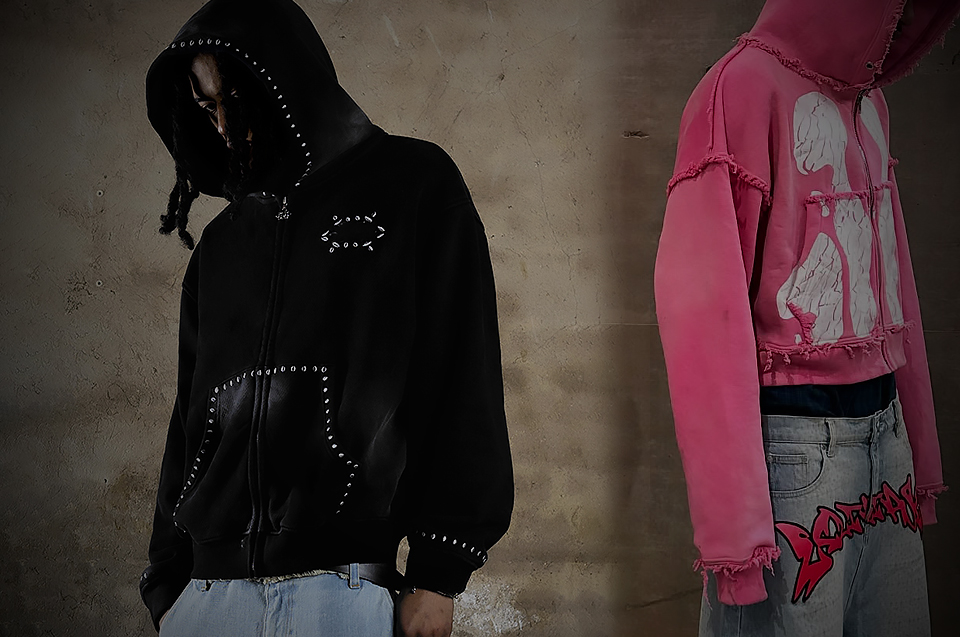
Heavyweight Cotton Is Not Just GSM: What Brands Should Really Evaluate Before Production
Many brand teams find out too late that a high GSM number on a fabric swatch does not guarantee a premium streetwear product. In the current market, where consumers are highly sensitive to how a garment drapes, feels, and holds its shape after washing, sourcing heavyweight cotton has become much more complex than simply asking a factory for thicker material. What sounds like a simple sourcing question often turns into a production nightmare when the final hoodies or t-shirts feel stiff, lose their intended silhouette, or fail to support complex graphic treatments.
This shift in consumer expectations means that established streetwear brands can no longer rely on basic apparel factories that treat heavyweight cotton as just another fabric option. For procurement teams and creative directors, the challenge is finding a streetwear manufacturer that understands fabric behavior, wash compatibility, and how a specific cotton weight will interact with the intended fit. This article breaks down why heavyweight cotton is more than a number, how it behaves differently across product categories, and what a capable production partner should actually discuss during the development phase.
Why Is Heavyweight Cotton More Than Just a GSM Number?
Heavyweight cotton is not just about thickness; it is about fabric identity, encompassing drape, structure, handfeel, and post-wash behavior. A GSM number only indicates weight density, but the yarn structure, knitting technique, and finishing processes determine whether the final garment will look premium or simply feel stiff and heavy.
When independent brands with real traction begin sourcing heavyweight cotton, the first question is almost always about GSM (grams per square meter). That instinct makes sense on the surface, but relying solely on this metric is one of the most common sourcing mistakes in premium streetwear development. Two different rolls of 400gsm cotton can produce entirely different garments. One might yield a structured, vintage-feeling hoodie that holds a boxy shape through multiple washes, while the other might result in a rigid, uncomfortable piece that restricts movement and looks stiff on the body.
The reality of premium streetwear production is that brands are rarely looking for weight alone. They are looking for presence, silhouette support, and a specific garment attitude. A specialized streetwear clothing factory understands that the yarn twist, the tightness of the knit, and the pre-shrinkage treatments are just as critical as the raw weight. If a supplier only quotes a GSM number without discussing these other factors, they are likely treating the material as a commodity rather than a crucial component of product development.
There is also the question of what the brand is actually trying to achieve. A 320gsm ring-spun cotton with a tight knit structure will behave completely differently from a 320gsm open-end spun cotton with a looser construction. One might be ideal for a clean, structured boxy tee with strong graphic placement, while the other might work better for a more relaxed, slightly worn-in feel. The number is the same; the product outcome is not. This is the kind of material intelligence that separates a true streetwear manufacturing partner from a factory that simply takes orders.
What Should Brands Actually Look For in Heavyweight Cotton?
Beyond weight, brands must evaluate heavyweight cotton based on handfeel, drape, structural support, and post-wash state. These four factors dictate how the fabric will interact with oversized fits, complex washes, and graphic applications, ultimately defining the garment's premium feel and long-term product integrity.
When reviewing fabric options with a streetwear manufacturer, procurement teams need to look past the initial swatch and consider the material's physical characteristics in a real-world context. There are four key dimensions worth examining closely.
Handfeel is the first thing a consumer notices when they pick up a garment. The texture of the cotton directly impacts the brand's visual identity. Is the goal a dry, coarse, vintage texture that communicates authenticity, or a tight, smooth, and highly refined surface that reads as premium and modern? The handfeel will also dictate which graphic and wash treatments are viable. A rougher surface might work beautifully with a crack print or a garment-dyed finish, while a smoother surface is better suited for clean, high-definition screen printing.
Drape is often misunderstood. Heavier fabric does not automatically drape well. Some heavyweight cottons provide excellent structural support for oversized silhouettes, keeping the garment's shape intact even after repeated wear. Others may drape more naturally, offering weight without feeling bulky. The difference matters enormously when the product is a boxy tee meant to hold a strong silhouette versus a relaxed oversized piece that should fall softly from the shoulders.
Structure is particularly important for boxy tees and heavy hoodies. The fabric must support the intended architecture of the garment. It determines whether a piece looks intentionally voluminous and well-designed, or just poorly fitted and shapeless. This is where many brands discover the gap between their design reference and the actual production outcome.
Post-Wash State is the true test of heavyweight cotton, and it is the one most often overlooked during the sampling phase. Will the fabric soften while retaining its shape, or will the silhouette collapse? Will the surface develop a desirable vintage character over time, or will it simply look worn out? A reliable streetwear production partner will guide brands through these checkpoints, ensuring that the chosen fabric aligns with the long-term vision for the product rather than just the first impression.
Why Does Heavyweight Cotton Work Differently in T-Shirts and Hoodies?
Heavyweight cotton behaves differently depending on the garment category; t-shirts require fabric that supports necklines and boxy cuts without stiffness, while hoodies need material that provides body volume, hood shape retention, and proper interaction with ribbing. Applying the same fabric logic across both categories is a common development mistake.
A frequent error in product development is assuming that a successful heavyweight fabric for one category will automatically work for another. The structural demands of a t-shirt are fundamentally different from those of a hoodie or sweatshirt, and treating them identically often leads to disappointing results.
For custom t-shirt manufacturing, heavyweight cotton is typically chosen to emphasize the silhouette, provide structure to the collar, and ensure the hem sits correctly. It is essential for executing oversized or boxy languages effectively. The shoulder seam needs to sit with intention, the collar rib needs to hold its shape without rolling, and the overall drape must communicate the brand's aesthetic clearly. However, if the fabric is too rigid, the t-shirt can feel restrictive and look unnatural on the body. There is a fine line between structured and stiff, and a factory that does not understand that line will produce garments that look good on a flat lay but feel wrong when worn.
Conversely, when developing hoodies, the focus shifts to body volume, the structural integrity of the hood, and how the heavy body fabric interacts with the cuffs and hem ribbing. The logic behind heavy French terry and heavy fleece is also distinct. French terry is typically used for a cleaner, more structured finish, while fleece offers a softer interior hand with more warmth. Both can be made in heavyweight versions, but they require different construction approaches and different wash treatments to achieve the intended result. A premium hoodie must still read as a high-quality streetwear piece after washing and construction, rather than just feeling like a thick blanket. Understanding these nuances is why working with a specialized custom streetwear clothing manufacturer is critical for brands aiming for consistent quality across different product lines.
How Does Heavy Fabric Change Fit, Graphic, and Wash Decisions?
Heavyweight cotton directly influences production choices across the entire development process; it dictates which oversized fits work best, how dense graphics like puff print or embroidery will sit on the fabric, and how the garment will react to intensive wash treatments like acid wash or enzyme wash.
The choice of heavyweight cotton cannot be made in isolation. It must be integrated into the broader tech pack and production strategy from the very beginning. A fabric's weight and texture will fundamentally alter how other design elements are executed, and a factory that does not understand these relationships will create problems that only become visible at the bulk production stage.
For fit, a heavy tee might be perfect for a structured boxy cut but completely unsuitable for an elongated, draped oversized style. The fabric's stiffness will fight against the intended silhouette, creating a garment that looks awkward rather than intentional. Similarly, heavier cottons react differently to garment washes like acid wash or enzyme wash. The density of the fabric affects how the wash solution penetrates the fibers, altering both the final color depth and the post-wash shrinkage. A brand that approves a wash result on a lighter sample and then switches to a heavier fabric without retesting will often find that the bulk production looks entirely different from what was approved.
Graphic applications also require careful consideration. Techniques like crack print, high-density puff print, or heavy embroidery behave differently on a 300gsm jersey compared to a lighter 180gsm body. A heavy fabric can support dense embroidery without puckering, which is a significant advantage for complex chest or back pieces. However, it might require specific curing times for screen prints to ensure the ink bonds properly to the denser fiber structure. DTG printing on very heavy fabrics can also produce different results than on lighter bodies, particularly in terms of color saturation and hand feel after printing. If a factory only confirms the GSM but fails to flag potential issues with the intended wash or print techniques, they lack the product interpretation skills required for premium streetwear development.
What Does a Strong Manufacturer Sound Like When Explaining Heavyweight Cotton?
A capable streetwear manufacturer discusses heavyweight cotton in terms of product outcomes, not just specifications. They explain how a specific fabric suits a boxy fit, how it will soften after washing, which graphic techniques will adhere best to its surface, and where potential production risks exist before sampling even begins.
When evaluating potential production partners, procurement teams should listen closely to how the factory discusses materials. A strong OEM streetwear manufacturer will not just hand over a price list and a fabric book; they will offer active product interpretation that connects the material choice to the final garment outcome.
You should expect to hear insights such as:
•"This specific heavy cotton is ideal for a structured boxy tee, but it will be too rigid for a longer oversized fit where you need more natural drape."
•"While this fabric is 400gsm, it will soften significantly after an enzyme wash while still holding its shape better than a lighter jersey would."
•"The dry surface of this French terry is better suited for crack prints or high-density graphics rather than soft, DTG-heavy treatments, which tend to sit differently on a textured surface."
•"This structured heavy fleece is perfect for a zip-up hoodie that needs to hold its architecture, but less ideal for a slouchy, washed-out style where you want the fabric to relax."
•"If you are planning a garment dye on this weight, we need to factor in a slightly longer dye cycle and a pre-shrinkage treatment to control the final dimensions."
In contrast, if a supplier's only input is "we can do 300gsm or 400gsm," they are operating as a basic fabric vendor rather than a true development partner. The absence of product interpretation is a clear signal that the factory does not have the depth of experience needed for premium streetwear. Some manufacturers, such as Groovecolor, focus specifically on heavyweight fabrics and complex finishing techniques, ensuring that the material choices actively support the brand's design intent rather than leaving the brand to figure out the connections on their own.
How Should Clothing Brands Review Heavyweight Cotton Samples?
Brands should review heavyweight cotton samples by testing the fabric before and after washing, evaluating the garment's drape and structure on a body rather than flat, and verifying that the material supports the intended graphic and surface treatments. The sample review process should also include a direct conversation with the manufacturer about how these material decisions will be maintained during bulk production.
The sampling phase is the most critical checkpoint for mitigating bulk production risks. Reviewing a heavyweight cotton sample requires more than just checking the measurements against the tech pack and confirming the color.
First, the fabric must be evaluated both before and after washing. The true character of a heavy fabric—its shrinkage, its final handfeel, and its structural integrity—often only reveals itself after a wash cycle. A sample that feels perfect off the production line might shrink unevenly, lose its shape, or develop an unexpected surface texture after washing. This is particularly important for any product that involves garment dyeing or wash treatments as part of the design.
Second, the garment must be reviewed on a fit model, not just laid flat on a table. The drape, the shoulder structure, the sleeve volume, and how the weight distributes across the body can only be accurately assessed when worn. A heavy tee that looks great flat might pull awkwardly across the chest or sit too stiffly at the hem when on a body.
Finally, brands must test the compatibility of the fabric with the intended graphics and finishes. Does the heavy surface texture interfere with the screen print? Does the fabric weight support the embroidery without distortion? Crucially, brands must ask the manufacturer how these material decisions will be controlled during bulk production. A reliable partner will have clear fabric checkpoints built into the production workflow to ensure that the sample-to-bulk consistency remains intact, preventing the final product from losing its intended streetwear attitude between the development phase and the warehouse.
What Do Weak Heavyweight Cotton Developments Usually Get Wrong?
Weak development often equates heavy weight with premium quality, ignores handfeel and post-wash behavior, applies the same fabric logic to both tees and hoodies, and relies on factories that cannot explain the material's real-world performance. The result is a product that may meet the spec sheet but fails to deliver the intended brand experience.
When brands experience production failures with heavyweight cotton, the root causes are often predictable and avoidable. The most common mistake is assuming that simply increasing the fabric weight automatically results in a more premium product. This ignores the crucial elements of handfeel, drape, and finish. A 450gsm cotton that feels stiff and uncomfortable is not a premium product; it is just a heavy one.
Another frequent error is evaluating the fabric only in its raw, unwashed state, leading to unexpected shrinkage or loss of structure in the final garment. This is especially problematic for brands that plan wash treatments as part of the design, since the wash behavior of a heavy fabric is often very different from what the initial swatch suggests.
Furthermore, using the exact same heavyweight fabric logic for both t-shirts and hoodies often results in stiff tees or unstructured sweatshirts. The two categories have different structural requirements, and a one-size-fits-all approach to fabric selection will almost always produce suboptimal results in at least one of them.
Ultimately, these issues stem from working with suppliers who cannot interpret the fabric's behavior and only communicate in terms of GSM numbers, leaving the brand to manage the production risks alone. When a factory does not flag these issues during the development phase, the brand typically discovers them at the bulk production stage, which is the most expensive and disruptive point in the production cycle to make changes.
Conclusion: Why Fabric Interpretation Is the New Standard in Streetwear Manufacturing
For established streetwear brands, heavyweight cotton is not merely a specification on a tech pack; it is a comprehensive product decision that impacts fit, finish, wash compatibility, graphic execution, and consumer perception. As the market continues to demand higher quality and more complex executions, the standard for manufacturing is rising accordingly.
The most successful brands are moving away from suppliers who only offer basic execution and are instead seeking out specialized partners who understand the nuances of fabric behavior, wash compatibility, and sample-to-bulk consistency. Choosing the right manufacturer means finding a team that can explain exactly how a specific heavyweight cotton will drive the product's final attitude, and more importantly, how they will protect that vision throughout the entire production process.
For procurement teams and product development leads who are currently evaluating production options, the ability to have a genuine material conversation with a factory is one of the clearest indicators of manufacturing depth. A factory that can connect fabric weight to fit logic, wash behavior, and graphic compatibility is a factory that understands streetwear as a product discipline, not just a garment category. For brands navigating these decisions, reviewing an industry comparison of specialized streetwear apparel manufacturers can provide valuable context on what to look for in a long-term production partner.
Streetwear Gets Boring Fast. The Right Manufacturer Keeps a Brand’s Product Alive
Streetwear dies the moment it starts playing too safe.
You can see it everywhere. Another oversized hoodie with nothing behind it. Another washed tee that looks like it came out of the same moodboard as ten other brands. Another jersey shape that wants to feel current, but still reads like teamwear. Another “premium” drop that is really just blank product with better photography.
That is the real pressure on brands right now. Not making more product. Making product that still has a pulse.
And that is exactly where the right streetwear manufacturer matters.
Because for brands working in this space, manufacturing is never just about getting garments made. It is about whether an idea keeps its energy once it moves out of the sketch, out of the reference folder, out of the creative director’s head, and into something real you can fit, style, shoot, sell, and build a drop around.
A good streetwear manufacturer does not drain that energy out of a concept. They know how to hold onto it. Sometimes they sharpen it. Sometimes they push it further. Sometimes they show a brand that the strongest version of an idea is not the first version.
That is the difference.
Not every supplier can make clothes. Plenty can.Not every supplier knows how to help a brand build product that still feels alive once it becomes physical.
More Brands Are Not Looking for “Production.” They Are Looking for Product That Hits Harder
This is where a lot of manufacturers still miss the point.
Brands are not only searching for a place to sew garments. They are looking for somebody who understands why one hoodie needs more drop in the shoulder, why another needs a tighter waist, why a jersey needs to move away from sport and lean into fashion, why a graphic feels dead until the print cracks a little, or why a varsity jacket only really starts talking once the patches, sleeve texture, rib, and silhouette all start pulling in the same direction.
That is not admin.That is product language.
And in streetwear, product language is everything.
A brand can have a strong visual idea, but if the manufacturer only sees “hoodie,” “tee,” “jacket,” or “pants,” the result gets flattened fast. The shape loses tension. The wash loses attitude. The graphic looks applied instead of embedded. The whole garment starts feeling like a safe version of what it was supposed to be.
That is why good streetwear brands do not only want execution. They want translation.
They want a manufacturer that can look at a direction and understand what makes it worth pushing.
Streetwear Product Usually Starts Messy. That Is Normal
The clean, polished final concept usually comes later.
The beginning is often looser than people admit. A few archive references. A football shirt from the early 2000s. A faded hoodie with the right shoulder line. A pair of denim with the right break over the shoe. A print reference pulled from old tattoo graphics. A varsity jacket that feels a little too classic until somebody says: make it wider, make it dirtier, make it less campus and more street.
That is how real product development often starts.
Not with certainty. With tension.
The brands that build stronger product usually are not the ones with the most polished first idea. They are the ones working with partners who know how to stay inside that unfinished space long enough to make the idea better before it gets locked.
That is why a real streetwear manufacturer should be able to do more than wait for a tech pack and follow instructions.
They should be able to look at a half-formed direction and say:
this wash needs more age, not more darkness
this fit needs more width, but less body length
this hoodie should not be soft; it should carry more structure
this graphic is too flat for the garment and needs another layer
this jersey will feel stronger if it moves away from pure athletic references
this jacket wants contrast, but not the obvious kind
That kind of feedback does not make the product less creative. It gives the brand more room to move.
The Best Streetwear Manufacturers Help Brands Build a Whole World, Not Just One Item
This is another place where the right partner changes the outcome.
A weak supplier treats every SKU like a separate task. A strong streetwear manufacturer sees how one product direction can open up a wider line.
One good graphic does not have to live on one T-shirt.One strong wash direction does not have to stay trapped in one hoodie.One varsity concept does not have to stop at outerwear.
Once the manufacturer understands the visual language, a single idea can start expanding naturally:
a cracked graphic tee becomes a washed zip hoodie with layered print and patchwork
a football-inspired jersey becomes a cropped fashion top, then a mesh panel piece, then a long-sleeve layered version
a varsity direction moves into chenille patch hoodies, felt applique sweatshirts, and contrast-panel jackets
a faded denim story opens into flared jeans, baggy shorts, distressed overshirts, and washed truckers
That is when product starts feeling like a line instead of a one-off.
And that matters more now than it did a few years ago. Brands are under pressure to make drops feel more complete, more thought-through, more styleable, and more worth talking about. The product itself has to do more work. It has to create the first impression, carry the image, and hold up under close-up content.
A manufacturer that understands streetwear can help a brand get there faster.
Fabric, Shape, and Finish Are Doing More Work Than Logos Right Now
The easiest way to spot weak streetwear product is that it relies too much on the surface.
If the garment needs the logo to do all the talking, something underneath is probably missing.
The pieces that feel stronger now usually have something else going on even before the branding enters the picture. The body is cut better. The fabric has more character. The wash creates depth. The rib, trim, sleeve, panel, or stitching changes how the silhouette reads. The garment already feels like something before any message gets added on top.
That is why serious brands are paying more attention to the parts of the product that used to get treated as technical details.
Fabric weight is not just a number. It changes how the whole piece sits.Wash is not just surface treatment. It changes emotion.Embroidery is not just decoration. It changes dimension.Distressing is not just damage. It changes tension.Fit is not just sizing. It changes whether a piece feels current, flat, relaxed, aggressive, or forgettable.
A streetwear manufacturer that understands this does not talk about techniques like menu options. They understand what those techniques do to the product’s mood.
That is what brands need.
Streetwear Is Pulling From Everywhere. Manufacturers Need to Keep Up
The category is more mixed now. That is part of what makes it interesting.
Football jerseys are crossing deeper into fashion.Varsity keeps coming back, but rarely in the exact same form.Vintage sports references are being rebuilt with cleaner styling or rougher finishes.Y2K denim is still moving, but the conversation is no longer just about being baggy. It is about shape, wash aggression, stacking, break, and how the leg moves with footwear.Old tattoo graphics, biker codes, workwear, music merch language, and collegiate references keep colliding in the same product universe.
So brands do not need a manufacturer that only understands “basic streetwear.” They need one that can move inside a product environment that is constantly cross-pollinating.
That means being able to handle pieces like:
cropped jerseys that feel more fashion than sport
acid wash zip hoodies that already look lived-in on day one
varsity jackets that use patchwork and embroidery without feeling costume-like
denim that carries visual pressure through wash, shape, and hem behavior
graphic product that needs more than a print file to feel finished
A generic supplier can imitate the outline of these items.A category-aware streetwear manufacturer understands why they work.
That is a big difference.
Why Brands Pay Attention to Manufacturers With Taste
Capacity matters. So does timing. So does production control.
But in this space, taste matters too.
Not taste as in “personal preference.” Taste as in knowing when a garment looks too clean, too heavy, too forced, too soft, too decorated, too empty, too obvious, too cautious.
A good streetwear manufacturer can feel that.
They know when a hoodie needs more body.When a wash has gone too far.When rhinestones add tension and when they start looking gimmicky.When a jersey still looks too athletic.When a graphic needs to break a little so it stops looking freshly printed.When a piece is technically correct but still not doing enough visually.
That kind of instinct is hard to fake. It usually comes from spending real time inside this category, not just servicing it from the outside.
And for brands, that instinct is useful. It saves time, avoids flat product, and opens up stronger decisions earlier in development.
Groovecolor Makes More Sense When You Look at It as a Streetwear Product Partner, Not a Generic Supplier
That is really the lens here.
Groovecolor is more interesting when it is understood as a streetwear manufacturer that can work with brands on category-specific product thinking, not just as a place that offers clothing production.
Because the value is not only in making garments.The value is in helping a brand push a product until it feels more resolved.
That could mean an acid wash hoodie that needs the right balance of fade, print, and fabric body.A varsity jacket that needs more texture and less predictability.A football-inspired jersey that should feel more style-led than team-led.A zip hoodie that looks too plain until embroidery, patch, print, and distressing start interacting.A pair of washed denim that only really lands once the silhouette and finish stop fighting each other.
That is where a real streetwear manufacturer becomes useful.
Not as the source of the brand’s identity.But as the partner who helps the product carry more of it.
The Wrong Manufacturer Makes a Brand Safer Than It Should Be
This is probably the simplest way to put it.
The wrong supplier makes a brand more generic.The right one helps it become more specific.
That is the whole game.
Because streetwear does not really reward caution for very long. The market moves too fast, references travel too quickly, and audiences see too much. The brands that keep product interesting are usually the ones willing to push shape, finish, and category direction just a little harder than the safe middle.
But that only works when the manufacturer can go there with them.
Not every partner can.
The good ones can look at a half-built idea and help it become a garment with more weight, more edge, more clarity, more visual pull, and more reason to exist.
And that is why, for brands that actually care about product, choosing a streetwear manufacturer is never just an operations decision.
It is a creative one too.
streetwear manufacturer